 The Edinburgh Tour Guide
Around 135,000 people a month search for Dean Village, which is a remarkable number for a place with no ticket, no opening hours, no gift shop and nothing to go inside. It is a pocket of restored mill buildings in a river gorge, fifteen minutes from the shops, and an hour covers it. Two things are worth knowing before you go, and neither appears on the pages currently ranking for it.
Go, early, and keep your voice down. It is free, it is genuinely beautiful, and it is also a residential conservation area with its own residents' association, where the building everyone photographs is somebody's flat. Give it an hour, not a morning. Look at the carved bread and pies set into the walls, which nearly everyone walks past. And do not pay £150 to photograph a public street, which is a real listing and is discussed below.
Cost
Nothing
Time needed
About an hour
What it is
Somebody’s street
Its real name
Water of Leith
What you are photographing is not called Dean Village
This is not our discovery and we are not going to pretend it is. The Edinburgh historian Andy Arthur, who writes the local history site Threadinburgh, laid it out in 2022, and it is the sort of thing that sounds like a pub argument until you look at his sources.
The settlement in the gorge, the one in every photograph, was not called Dean Village for almost all of its recorded history. It was Water of Leith, or the Village of the Water of Leith. The actual Village of Dean was a separate place up the hill, beside Dean House on the Dean Path, and it has effectively vanished. The name slid downhill and attached itself to the other village from the late nineteenth century.
What makes it publishable rather than a nice theory is that he shows his working, on named maps held in national collections.
| Map | What it records |
|---|---|
| 1560, Siege of Leith map | The Denneshown as a place distinct from the Comon Myllesin the gorge |
| 1654, Blaeu's atlas | The mills in the gorge marked as “Den Mills” |
| 1682, Adair | The settlement is Water Lieth. Dean is separate, to the north |
| 1804, Ainslie | Water of Leithis the village and Leith Wateris the river, the opposite way round from today |
| 1817, Kirkwood | Two separate villages: Dean up the hill, Water of Leith in the gorge |
| Up to 1945, Ordnance Survey | Every OS map and town plan still says Water of Leith |
And the detail that settles it for us rather than leaving it as one writer against the world: Edinburgh World Heritage concedes the point on its own page, which opens by saying Dean Village traces its origins to the Water of Leith Village
. The heritage body and the local historian agree. The guidebooks just never caught up.
The upper village, the real one, is described in Malcolm Cant's Villages of Edinburgh: a few lanes on the Dean Path, single-storey thatched cottages, about 400 people in the mid-eighteenth century. It is gone. What survives is its name, on somebody else's village.
It is a street where people live
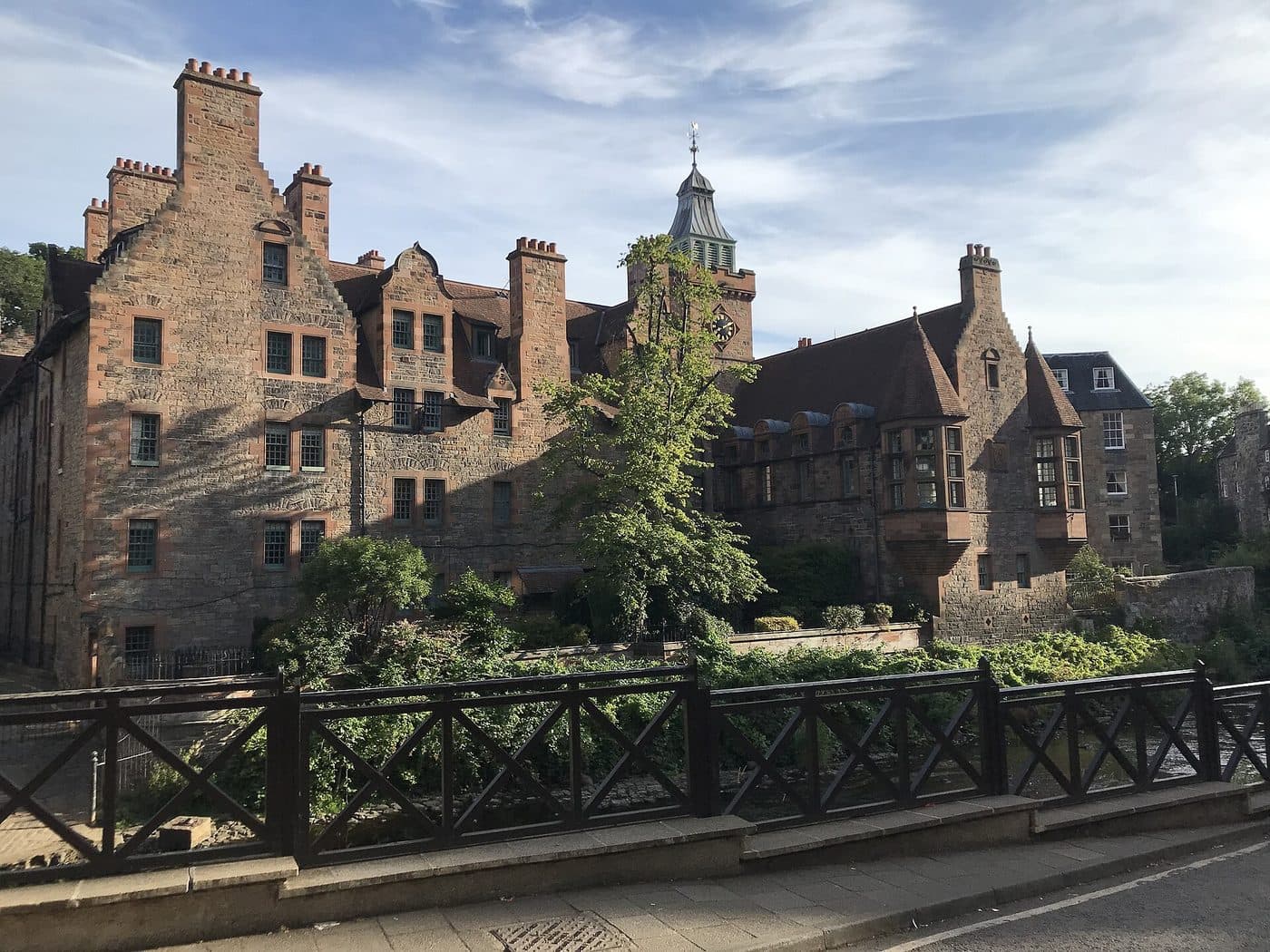
Dean Village has a residents' association, the Dean Village Association, a charity founded in 1971 to represent the people who live in the Dean Conservation Area. It publishes a residents' newsletter three or four times a year. That is not the profile of a tourist attraction. It is the profile of a neighbourhood.
You do not have to take our word for the pressure, either. A Facebook thread titled Respecting residents in Edinburgh's Dean Village
ran to more than 170 comments, with respect for private homes the dominant theme. A Tripadvisor review prominent enough to surface in Google's own results calls the place overrun with self-seekers and obnoxious, loud visitors, so I can understand why the locals get irate
. Even the travel blog ranking third for this search opens its practical advice with a reminder that it is a residential area.
How to go without being the reason they are fed up
- Early is better for everyone. Before about 9am you will have it nearly to yourself, the light is better on the stone, and nobody is trying to get to work around you.
- Stay on the public street and the bridge. The courtyards and stairwells of Well Court are private, and the gardens belong to somebody.
- It is a small gorge, so sound carries. A group that would be unremarkable on the Royal Mile is genuinely loud down here.
- Do not knock on doors or shoot through windows. This sounds obvious and is apparently not.
Is it worth it, and what not to pay for
US News ranks Dean Village 22nd out of 25 things to do in Edinburgh, and that is not unfair. Judged as an attraction it has nothing to enter, nothing to queue for and no exhibit. Judged as a free hour in a place that looks like nowhere else within a mile of a capital city high street, it is excellent. Both of those are true at once, and which one you experience depends almost entirely on whether you arrived expecting a destination or a detour.
You do not need a guide. If you want one, two genuine options exist and both are cheap, because there is no ticket to mark up.

Dean Village and Circus Lane Walking Tour with a Local
Two hours through Dean Village, the New Town and Circus Lane with a local guide. Rated 4.93, the highest of any walk covering this area, and the least expensive of the three.

Walk Dean Village, Circus Lane and the Royal Botanics
Two and a half hours ending at the Royal Botanic Garden, which is also free to enter. Smaller review sample than the walk above, so weigh that accordingly.
Now the one we are not linking to. There is a listing called the Dean Village Private Photography Tour
at £150 for 90 minutes. At the time of writing it shows no rating and no reviews at all. It may be perfectly good. But £150 to be shown where to stand on a public street that costs nothing to walk into, with no track record attached to it, is not something we are going to put a booking button on. If you want a photography guide, that is a reasonable thing to want; look for one with reviews.
With or without a guide, the rest of this page is what to look at once you are down there, and how the ground actually lies.
What to actually look at, and the fire that ended it
The mistake nearly everyone makes is to photograph the view from the bridge and walk straight back out, which takes about four minutes and misses the entire point of the place.
The village existed for eight centuries because of milling. The mills on the Water of Leith ground the city's grain, and the settlement was bound up with the Incorporation of Baxters, Edinburgh's guild of bakers. What survives, and what is worth five minutes of actually looking, are the mill stones and the carved stone plaques set into the walls, showing baked bread and pies. They are the receipts of the place. They are free, they are outdoors, and they are behind you while you photograph the clock tower.
The industry ended the way mill towns usually do. In November 1824 a fire swept through the village and the surrounding area, destroying mills and warehouses, and the milling economy never fully recovered. What you are walking through now is the twentieth-century restoration of what the fire and the decline left behind, which is why it looks so tidy.
Getting there, and the bit that catches people out
It is close. That is the whole appeal: you can be standing in a Victorian mill village a quarter of an hour after leaving the department stores. The thing to understand is not the distance but the shape of the ground.
| Route | What it is like |
|---|---|
| On foot from the west end of Princes Street | Down Queensferry Street, then the steep drop of Bell's Brae into the gorge. Short, and entirely downhill on the way in |
| Along the Water of Leith Walkway | The riverside path links it to Stockbridge in one direction and onwards towards Leith. The nicest way to arrive and the nicest way to leave |
| Coming back | Uphill, whichever way you go. It is a gorge, so there is no flat exit |
We are not going to give you a number of minutes we have not measured. The useful warning is the one nobody puts up front: you descend into it and you have to climb back out, on cobbles and narrow pavement in places. If anyone in your group has trouble with slopes or uneven ground, plan the route properly rather than treating this as a flat stroll from the New Town. Pair it with the rest of your day accordingly.
And if free, pretty and overlooked is what you came for, the obvious companion is the closes off the Royal Mile, which cost nothing, are walked past by almost everybody, and sit a great deal closer to whatever else you are doing that day.
Quick answers
Is Dean Village worth visiting?
Yes, with your expectations set correctly. It is a fifteen-minute detour into a river gorge full of restored mill buildings, it costs nothing, and an hour covers it comfortably. It is not an attraction with anything to go inside, which is why US News ranks it 22nd out of 25 things to do in Edinburgh. Treat it as a short, free, very pretty walk rather than a half day and it is one of the best-value hours in the city.
How much does Dean Village cost?
Nothing. It is a public street in a residential conservation area, not a ticketed site, so there is no admission, no opening hours and nothing to book. Guided walks that include it start at about £18 for two hours, but you do not need one to walk through.
Is Dean Village really not called Dean Village?
For most of its recorded history, no. The Edinburgh historian Andy Arthur has set out, using maps from 1560 through to Ordnance Survey plans of 1945, that the milling settlement in the gorge was called Water of Leith, or the Village of the Water of Leith. The actual Village of Dean was a separate place up the hill beside Dean House, and it has essentially disappeared. Edinburgh World Heritage concedes the point in passing on its own page, which describes Dean Village as tracing its origins to the Water of Leith Village.
Do people live in Dean Village?
Yes, and that is the single most important thing to know before going. It is a conservation area with its own residents’ body, the Dean Village Association, a charity founded in 1971 which publishes a residents’ newsletter several times a year. The buildings everyone photographs, Well Court in particular, are flats with people behind the windows.
How long do you need in Dean Village?
About an hour, including the walk down into the gorge and back out. If you continue along the Water of Leith Walkway towards Stockbridge it becomes a pleasant half morning. There is nothing to queue for and nothing to book, so the time is entirely yours to set.
What should I actually look at in Dean Village?
The carved stone plaques and mill stones set into the buildings, which show baked bread and pies and record the village’s eight centuries as a milling settlement tied to the Incorporation of Baxters, Edinburgh’s bakers. Almost everybody photographs the view from the bridge and walks past the stones that explain why the place exists.
Is Dean Village accessible?
It sits in a river gorge, so getting to it means walking down and getting out means walking back up, on cobbles and narrow pavements in places. That descent and climb is the part that catches people out, more than the distance. Anyone with mobility difficulties should plan the route rather than assume it is a flat stroll from the New Town.

About this guide
Written by Diego Fresno, Independent travel writer and researcher. The naming research on this page is Andy Arthur's, published on Threadinburgh in 2022 and credited in the text, and we are citing it because his map sources are named and checkable and because Edinburgh World Heritage's own page corroborates the origin. The Baxters, the carved plaques and the fire of November 1824 come from Edinburgh World Heritage, and the Dean Village Association details from its own site, all read on 18 September 2026. Tour prices and review counts came from a live Viator search in GBP the same day. Not claimed: a walking time we did not measure, any position the residents' association has taken on tourism, or anything about who lives in which building. One product is deliberately described and not linked. Verified: August 2026. About the author →