 The Edinburgh Tour Guide
Princes Street Gardens is the best free thing in the centre of Edinburgh and the one everybody walks through without reading anything about first. That is usually fine. It stops being fine at about five o'clock on a winter afternoon, when you discover that this is not an open park but two separate parks with gates, and that the gates start closing an hour before the gardens do.
Go early, and check the month before you plan an evening. The gardens open at 7am and close anywhere between 6pm and 10pm depending on the date, but the gates start shutting about an hour before to clear the park, with the west gate going before the east. It is two parks split by The Mound, not one, and the full council table is below.
Cost
Nothing
Opens
7am, daily
Gates close
1 hour early
It is two parks, not one
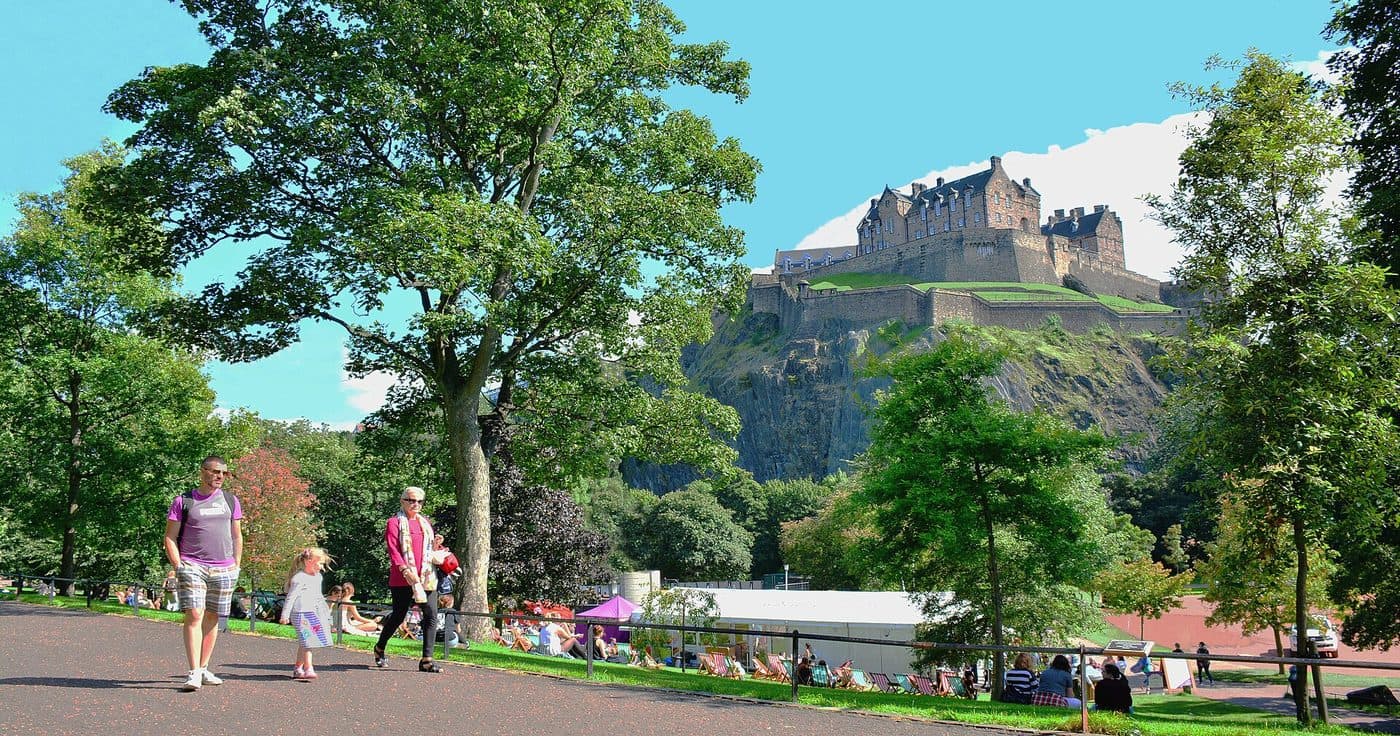
The split runs down The Mound, the great ramp of earth carrying the National Gallery of Scotland and the Royal Scottish Academy. Everything east of it is one park and everything west is another, and they are not the same size or the same experience.
| East Princes Street Gardens | West Princes Street Gardens | |
|---|---|---|
| Size | About 8.5 acres | About 29 acres |
| Runs from | The Mound to Waverley Bridge | The Mound out towards Lothian Road |
| What is in it | The Scott Monument | The Ross Fountain, the floral clock, the Ross Bandstand |
| Gate closes | 15 minutes after the west gate | First |
| Toilets | One set, accessible only, RADAR key | Three sets, one of them gents only |
Acreages are Wikipedia's, and they add up to the 37 acres most listings quote for the whole thing. The practical consequence is simple: if you have half an hour, the west gardens are the ones with the fountain, the clock, the bandstand and the castle directly overhead. The east gardens are smaller, busier, and mostly about the Scott Monument.
The gates, which are the thing nobody tells you
The City of Edinburgh Council publishes the hours in its parks directory, and they are more complicated than any park has a right to be: seven different closing times across the year, plus a gate-closing window on top. Here is the whole thing, read on 24 September 2026.
| Dates | Gardens close | West gate from | East gate from |
|---|---|---|---|
| 1 Jan to 29 Mar | 6pm | 5.00pm | 5.15pm |
| 30 Mar to 26 Apr | 7pm | 6.00pm | 6.15pm |
| 27 Apr to 31 May | 8pm | 7.00pm | 7.15pm |
| 1 Jun to 30 Aug | 10pm | 9.00pm | 9.15pm |
| 31 Aug to 27 Sep | 8pm | 7.00pm | 7.15pm |
| 28 Sep to 25 Oct | 7pm | 6.00pm | 6.15pm |
| 26 Oct to 31 Dec | 6pm | 5.00pm | 5.15pm |
What that actually means for your day
- It opens at 7am, every day. Early is genuinely the best time here and it costs you nothing.
- From late October to late March the park shuts at 6pm and the west gate starts closing at 5pm. In a city where it is dark by four in December, the gardens are shut for most of what feels like the evening.
- Do not rely on it as a shortcut. Cutting from Princes Street down to the Old Town through the gardens works in June and does not work in November.
- For a winter sunset, go up a hill instead. Calton Hill is five minutes east, it is also free, and the council lists no closing time for it at all because it is open hillside rather than a gated park.
- The council also notes that the entrance from Kings Stables Road is closed to pedestrians and vehicles, with access instead through St Cuthbert's churchyard. That note carries no date, on a page that has other passages years out of date, so treat it as a maybe and not a certainty.
One thing worth clearing up, because it looks like an error and is not. If you search for the opening times you will see the council credited with The Gardens open at 7am
and Opening times: 10am-10pm
in the same breath, which reads like the council contradicting itself. It is not contradicting itself. The 10am to 10pm belongs to the public toilets in the west gardens, a separate field further down the same page. Google has mashed two fields together in its snippet. The gardens open at seven.
Is it worth your time
Yes, and it is the easiest yes on this site, because it is free, it is open at seven in the morning, and it is the single best view of the castle that costs nothing. If you only do one free thing in Edinburgh, walk the west gardens from the Lothian Road end towards The Mound with the castle above you on the left.
Nothing sells a public park, so there is nothing for us to book you into down here. The only paid thing inside the gardens is the Scott Monument, and that sells its tickets from a kiosk at the base and nowhere else. The one card below is for the thing you will spend the whole walk photographing, and we earn a commission on it, which is worth saying on a page whose entire argument is that the best bit is free.

Edinburgh Castle Guided Walking Tour, Entry Included
Ninety minutes with a guide and castle entry included, on the rock you have been looking up at from the gardens. The deepest review history of any castle tour we found.
It was a loch, and it was a sewer
The reason this valley exists is that somebody spent decades emptying it. Wikipedia, whose account is the one most other sources follow, records that the Nor Loch was an artificial body of water on the north side of the town, created as part of its medieval defences, which is also precisely why Edinburgh could not grow in that direction.
It was also, in the same account, habitually polluted by sewage draining downhill from the Old Town. A defensive lake at the bottom of a hill covered in tenements with no drains is going to end up as one thing, and it did. The loch was drained over a long stretch from the 1760s as the New Town went up, and the gardens themselves were laid out in the 1820s. In 1846 the railway was cut along the southern edge of the valley to join Haymarket to what became Waverley, which is why there are trains running under your feet while you look at the flowers.
The council adds a detail that is oddly satisfying: the boundary between the Old Town and New Town conservation areas is not the road, or the ridge, or anything you would guess. It is the north fence of the railway.
The fountain its donor never saw working
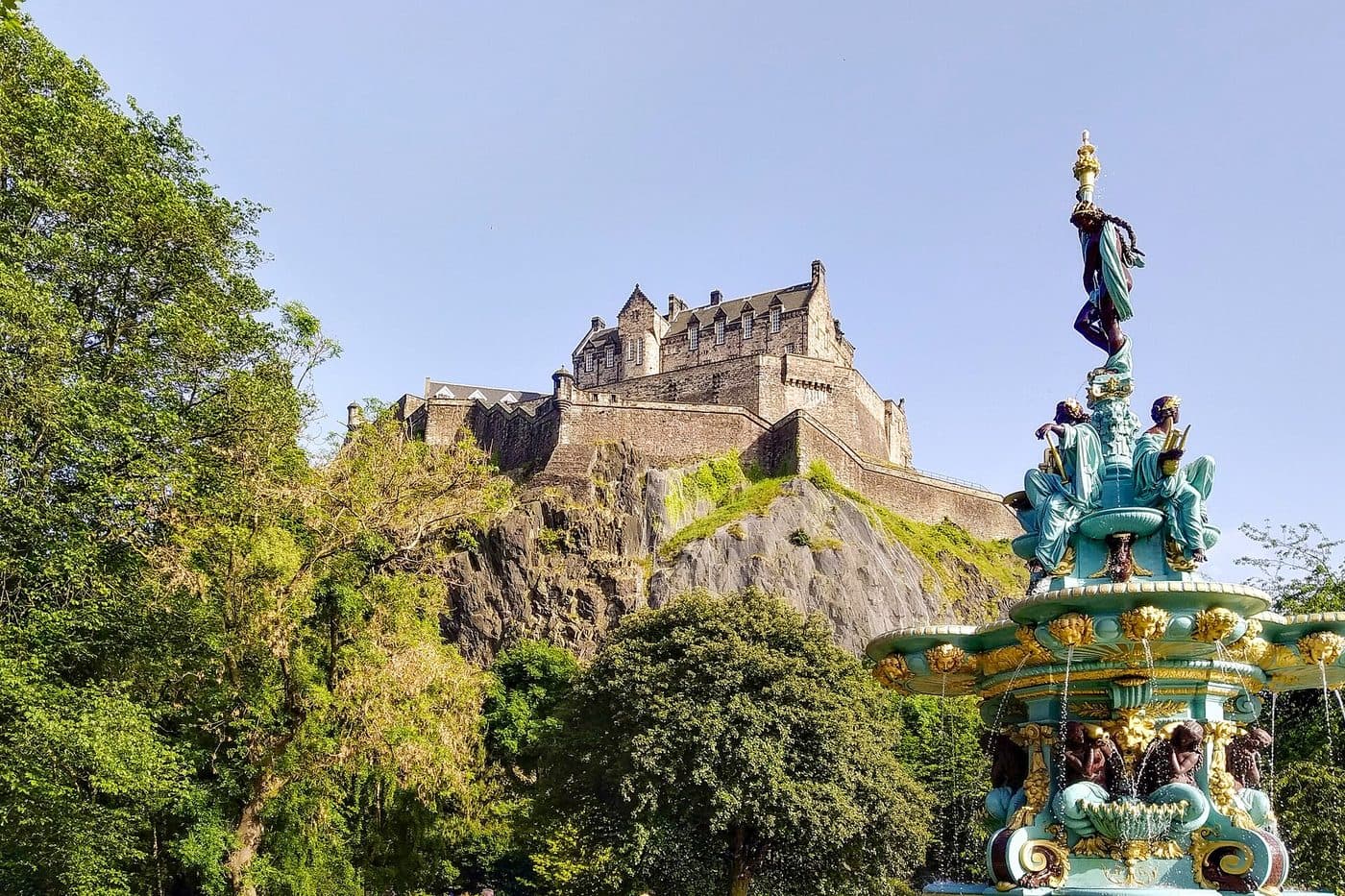
The Ross Fountain is the most photographed object in the west gardens after the castle itself, and its story is better than its reputation. According to Edinburgh World Heritage it is a piece of nineteenth-century French cast iron from the Durenne ironworks, designed by Jean-Baptiste Klagman, who also produced work for fountains in Paris including the Fontaine Médicis in the Luxembourg Garden. Durenne's pitch was that cast iron was as fine as bronze and far cheaper, and looking at the cherubs and water nymphs it is hard to argue.
It was completed and opened in 1872. Its donor, David Ross, died in 1871, a year short of seeing it finished. Then it stopped: the fountain ran dry in 2010 and stayed dry until July 2017, when Edinburgh World Heritage, the Ross Development Trust and the council restored it and got the water going again.
Which parts of the council page to trust
- The opening hours are maintained. The seasonal table above is detailed, internally consistent and clearly kept up.
- The prose is not. The same page says the Ross Fountain
is currently being repaired
and will be unveiledin the spring of 2018
. That was eight years ago and the work is long done. - It also says the play area
will be reopened in Spring 2024
, which has also been and gone. We have not been to look, so we are not going to tell you what state it is in. - The lesson for a visitor: take the times from that page, and take the descriptions from somewhere else.
The floral clock, and the bits nobody publishes
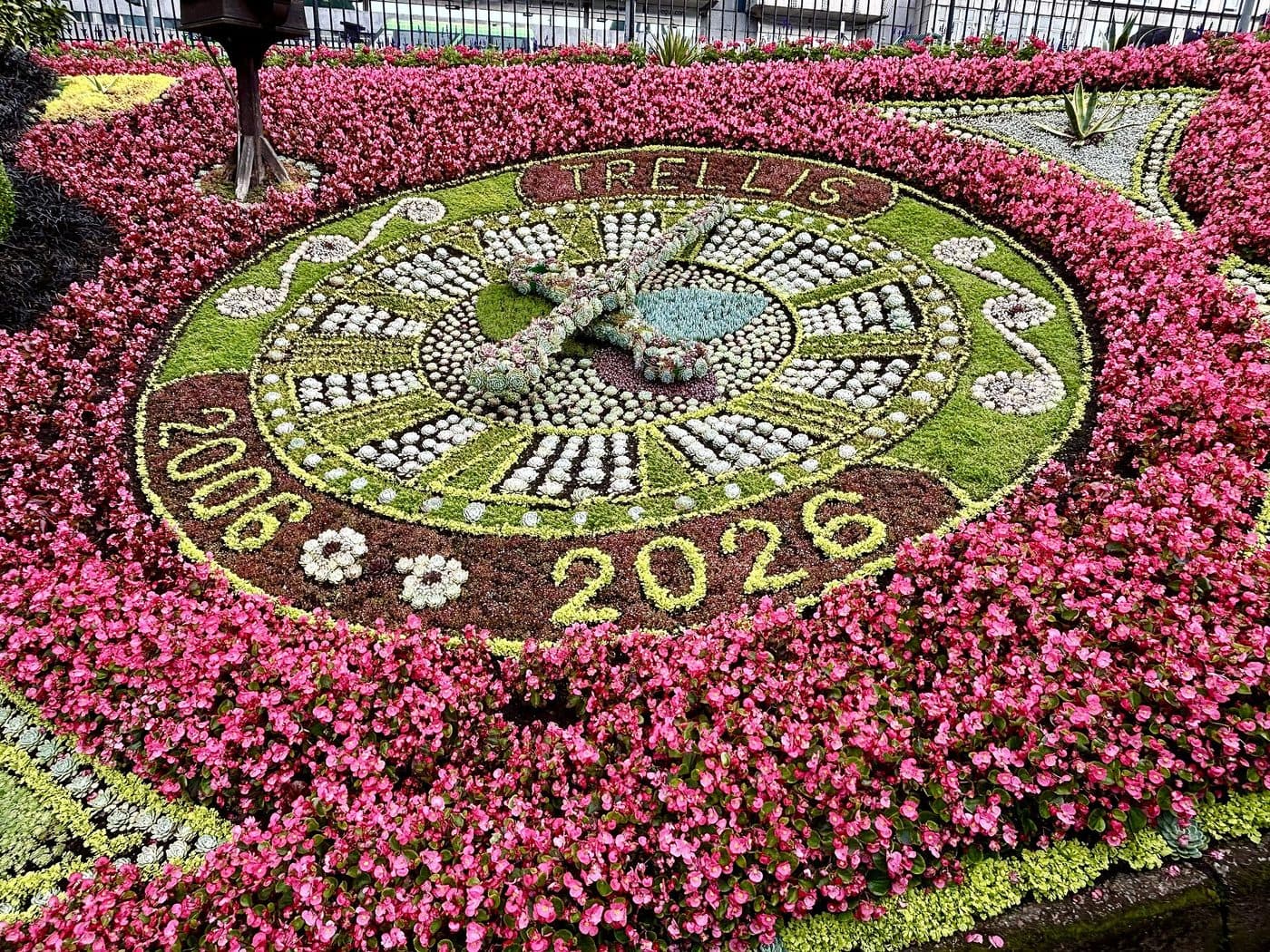
The floral clock sits in the west gardens near the Princes Street side and it is a working clock planted into the ground. The council says it was first planted in 1903 and that the design changes every year to commemorate a different anniversary, using around 30,000 plants chosen for being low and dense enough to read as a surface: lobelia, pyrethrum, golden moss, and succulents such as echeveria and sedum.
You will see it called the oldest floral clock in the world in plenty of places. The council does not say that, so neither will we. What it does say is world renowned
, and 1903, and you can decide what that is worth.
Two more things the council publishes that no travel page seems to bother with. First, dogs are welcome but must be on leads at all times. Second, and more useful than it sounds, the four sets of public toilets are not equivalent, and turning up at the wrong one is a genuinely bad twenty minutes:
| Where | Hours | The catch |
|---|---|---|
| East Gardens, The Mound | 24 hours | Accessible only, and needs a RADAR key |
| West Gardens, The Mound | 10am to 10pm | Gents only, no accessible provision |
| West Gardens, Ross Bandstand | 10am to 8pm | Summer only. RADAR key for accessible |
| West Gardens, West End | 10am to 10pm | The most generally useful of the four. RADAR key for accessible |
Note that every accessible toilet in the gardens needs a RADAR key, the national scheme key for disabled-access toilets in the UK. If you need one and do not have one, that is worth knowing before you arrive rather than after.
Finally, the obvious thing this page has deliberately not covered: December. From mid-November the east gardens become the Christmas market and part of the west gardens becomes a fairground, the hours change, and almost nothing above applies. That has its own page, with the prices and what actually costs money, and if you are here in winter that is the one to read. The rest of the year, this is just the best free park in the middle of a capital city, and it opens at seven.
Quick answers
What time do Princes Street Gardens close?
It changes seven times a year and the gates close before the park does. The council gives: 6pm from 1 January to 29 March, 7pm to 26 April, 8pm to 31 May, 10pm from 1 June to 30 August, 8pm to 27 September, 7pm to 25 October, and 6pm from 26 October to 31 December. On top of that the gates start shutting about an hour earlier to clear the gardens, and the west gate goes about fifteen minutes before the east one. So in winter the park closes at 6pm but the west gate starts closing at 5pm.
What time do Princes Street Gardens open?
Seven in the morning, every day, according to the City of Edinburgh Council. If you have seen 10am quoted, that is a Google snippet mixing up two fields on the council’s page: the 10am to 10pm belongs to the public toilets in West Princes Street Gardens, not to the gardens themselves.
Are Princes Street Gardens free?
Yes, completely, and they are the best free thing in the middle of Edinburgh. The only things inside them you pay for are the Scott Monument, which sells tickets from a kiosk at its base, and whatever is on in December, when the Christmas market takes over the east gardens and the fairground takes part of the west.
Is Princes Street Gardens one park or two?
Two. They are split by The Mound, the ramp carrying the National Gallery and the Royal Scottish Academy. East Princes Street Gardens runs from The Mound to Waverley Bridge and covers about 8.5 acres. West Princes Street Gardens is much bigger at about 29 acres and runs out towards Lothian Road. They have separate gates, separate closing times fifteen minutes apart, and completely different toilet provision.
What was there before the gardens?
A loch, and not a pleasant one. The Nor Loch was an artificial body of water forming part of the town’s medieval defences on its north side, which is also why the city could not expand that way. Wikipedia’s account, which is the one most sources follow, records that the water was habitually polluted by sewage draining downhill from the Old Town. It was drained over a long period from the 1760s as the New Town went up, and the gardens were created in the 1820s.
What is the Ross Fountain?
The ornate cast-iron fountain in the west gardens, below the castle. Edinburgh World Heritage records that it came from the Durenne ironworks in France, was designed by Jean-Baptiste Klagman, who also worked on fountains in Paris, and was completed and opened in 1872. Its donor, David Ross, died in 1871 and never saw it finished. It stopped running in 2010 and was restored from July 2017 by Edinburgh World Heritage, the Ross Development Trust and the council. The council’s own parks page still says the refurbished fountain will be unveiled in spring 2018, which tells you something about how often that page is updated.
Are there toilets in Princes Street Gardens?
Four sets, and they are not equivalent, which nobody publishes. The council lists: East Princes Street Gardens at The Mound, 24 hours but accessible-only and needing a RADAR key; West Gardens at The Mound, 10am to 10pm, gents only, no accessible provision; West Gardens at the Ross Bandstand, 10am to 8pm in summer only; and West Gardens at the West End, 10am to 10pm with accessible provision. Every accessible toilet needs a RADAR key.
Can you take a dog into Princes Street Gardens?
Yes, and the council asks that dogs are kept on leads at all times in the gardens.

About this guide
Written by Diego Fresno, Independent travel writer and researcher. The opening hours, the gate-closing times, the toilets, the dogs rule and the floral clock planting all come from the City of Edinburgh Council's parks directory, read on 24 September 2026. The Ross Fountain history comes from Edinburgh World Heritage, and the Nor Loch and the two parks' acreages are attributed to Wikipedia rather than passed off as primary research. Deliberately not claimed: that the floral clock is the world's oldest, because the council does not say so; the current state of the play area or the Kings Stables Road entrance, because the council's own page carries passages years out of date and we have not been to check; and anything about December, which belongs to the Christmas market guide. One correction worth making in the other direction: the council is not contradicting itself about opening times, whatever Google's snippet suggests. The 10am to 10pm belongs to the toilets. Tour figures were re-queried from Viator on 22 September 2026. This page carries one affiliate link and its main argument is that the best thing here costs nothing. Verified: August 2026. About the author →